Common Fees & Charges: The Hidden Costs You Need to Watch Out For
Uncover the hidden costs: from annual fees and forex markups to the 18% GST multiplier and the DCC trap.
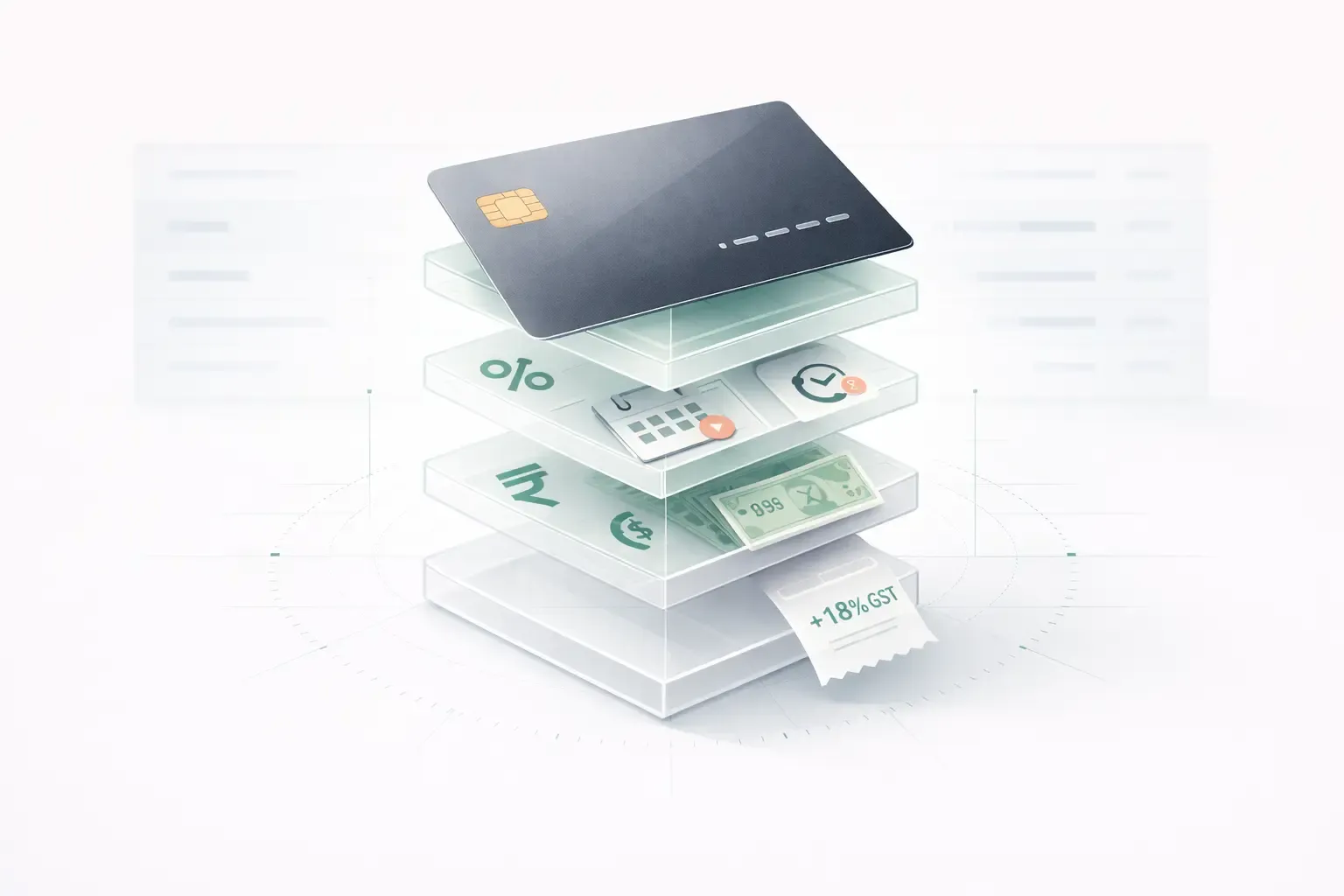
Credit cards are fantastic tools, but they come with a catch: a minefield of hidden fees and charges designed to extract money from your wallet without you even realizing it. These are not accidental; they are profit centers carefully woven into the fine print of your cardholder agreement.
In the Zero Interest philosophy, knowledge is your shield. This is your guide to staying in the Reward Loop and ensuring you never pay a paisa more than you need to.
The Welcome Mat: Joining and Annual Fees
Most premium cards come with an Annual Fee. This is the recurring cost of keeping the card active. Banks justify this by offering perks like lounge access or accelerated reward points.
Our strategy is simple: always request a waiver. If you have been a good customer, banks are often willing to waive the fee to retain you. If they refuse, and the card’s benefits do not significantly outweigh the fee, it is time to consider canceling or downgrading. Never pay an annual fee out of habit.
The Punishment Tax: Late Payment Charges
This is where banks truly make their money. Missing a payment due date by even one day triggers a Late Payment Charge. These can range from ₹500 to ₹1,300 depending on your balance.
As we established in Rule #4 (Autopay is non-negotiable), a late payment is a triple whammy. It triggers the fee, wrecks your CIBIL score, and kills your interest-free grace period. Automation is your absolute defense against this predatory charge.
The Global Strategy: Forex and DCC
When you swipe your card in another country, the bank typically charges a Forex Markup Fee of 2% to 3.5%. Unless you are using a specific Zero Forex Markup card, this is a hidden tax on your international lifestyle.
Even more dangerous is Dynamic Currency Conversion ( DCC ). This happens when a foreign merchant offers to charge you in Indian Rupees (INR) instead of the local currency. It sounds helpful, but the exchange rate is almost always inflated. Always choose to pay in the local currency of the country you are in to let your bank handle the conversion at a more competitive rate.
The Cash Advance: The Instant Debt Trap
On most standard cards, using an ATM triggers a Cash Advance Fee (usually ₹300 to ₹500) and starts accruing interest immediately. Unlike a regular purchase, there is no interest free grace period for cash.
Treat the ATM feature as an emergency only tool. From the second the notes hit your hand, the bank starts charging you interest, often upwards of 42% per annum. Unless your specific card terms waive both the fee and the interest, leave the ATM alone.
The Invisible Bite: GST on Everything
GST is applicable on almost all credit card fees and charges. If you are charged a ₹1,000 annual fee, your statement will actually show ₹1,180 after the 18% GST is added.
This 18% invisible tax applies to late fees, forex markups, and interest too. Every fee you avoid is not just saving you the fee amount; it is saving you the government’s share as well.
The Final Word
Mastering the fine print is not about being afraid to use your card; it is about using the right card for the right purpose. If you are traveling abroad, use a forex optimized card. If you are at home, use your rewards heavy card. The Reward Loop only works when you know exactly what the bank is trying to charge you.