The Merchant Game: How 'No-Cost EMIs' Actually Work
A deep dive into the mechanics of No-Cost EMIs. Learn how to spot the hidden costs and use them as a tool for liquidity rather than a trap for impulsivity.

Walk into any electronics store or browse a major e-commerce site and you will see it everywhere: the No-Cost EMI. It is a proposition that sounds mathematically perfect. You buy a phone for ₹60,000 and you pay ₹10,000 a month for six months. No interest, no extra fees, just pure convenience.
But banks and merchants are not in the business of giving out free loans. To stay in the Reward Loop, you must understand the mechanics of the merchant game so you can decide if an EMI is a tool for your liquidity or a trap for your impulsivity.
The Illusion of No Interest
The first thing to understand is that No-Cost does not mean Interest-Free. Under RBI guidelines , banks are generally prohibited from offering 0% interest loans.
When you take a No-Cost EMI, the bank still charges its standard interest (usually 13% to 15%). However, the merchant gives you an upfront discount equal to that interest amount at the time of purchase. To you, it looks like you paid the original price over time. To the bank, they earned their interest from the merchant instead of you.
The Reality Check: A Sample Calculation
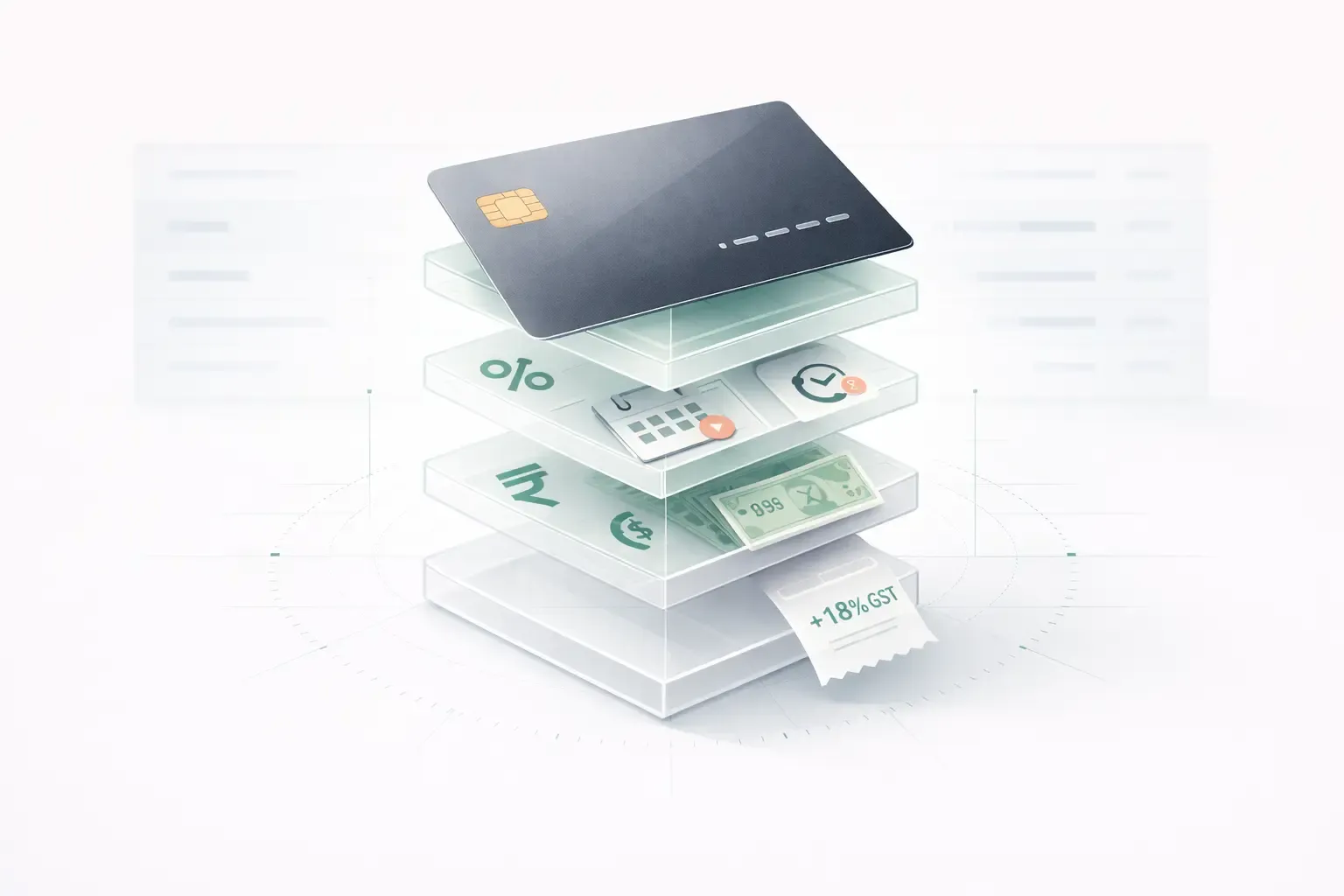
While the interest is neutralized by the discount, small leaks like GST and processing fees mean you often pay more than the sticker price.
Example: Buying a ₹60,000 Smartphone (6-Month Tenure at 15% Interest)
| Component | Upfront Payment | No-Cost EMI |
|---|---|---|
| Product Price | ₹60,000 | ₹60,000 |
| Upfront Discount | ₹0 | -₹2,500 |
| Initial Loan Amount | ₹0 | ₹57,500 |
| Total Interest (6 months) | ₹0 | +₹2,542 |
| Processing Fee | ₹0 | +₹199 |
| GST on Interest (18%) | ₹0 | +₹458 |
| GST on Processing Fee (18%) | ₹0 | +₹36 |
| Actual Total Outgo | ₹60,000 | ₹60,235 |
In this common scenario, the No-Cost EMI actually costs you an extra ₹235 due to taxes and fees.
The Hidden Risks: Beyond the Math
The real danger of the No-Cost EMI is not just the extra ₹235; it is the psychological and structural shift in your finances:
- The Loss of Cash Discounts: Often, a merchant will offer a flat discount if you pay in full today. If you choose the No-Cost EMI, you usually lose that upfront savings.
- Credit Limit Blockage: The entire amount is blocked from your credit limit immediately. As you pay your EMIs, your limit is slowly restored. This can negatively impact your utilization ratio in the short term.
- The Psychological Up-Sell: Because the monthly cost feels small, you are more likely to buy a more expensive model than you originally planned.
The Reward Loop Verdict
Can a No-Cost EMI be a part of the Reward Loop? Yes, but only as a tool for liquidity management, never for affordability.
Use it if: You have the full cash amount sitting in a high-yield account where the interest earned over 6 months exceeds the additional charges, or the merchant discount itself exceeds the total of the interest plus GST.
Avoid it if: You are using it because your bank balance is currently low. That is the entrance to the Debt Trap.
The Choice of a Strategist
The No-Cost EMI is a masterclass in financial engineering. For the impulsive spender, it is a frictionless slide into debt. For the RewardVita strategist, it is a calculation. Look past the monthly installment, factor in the leaks, and only move forward if the math truly serves your wealth rather than the merchant’s sales targets.