The 'Zero Interest' Manifesto: How to Never Pay Credit Card Interest
Discover the Zero Interest rules that turn credit cards into a net benefit. Learn why the Minimum Amount Due is a trap and how to automate your way to disciplined credit usage.

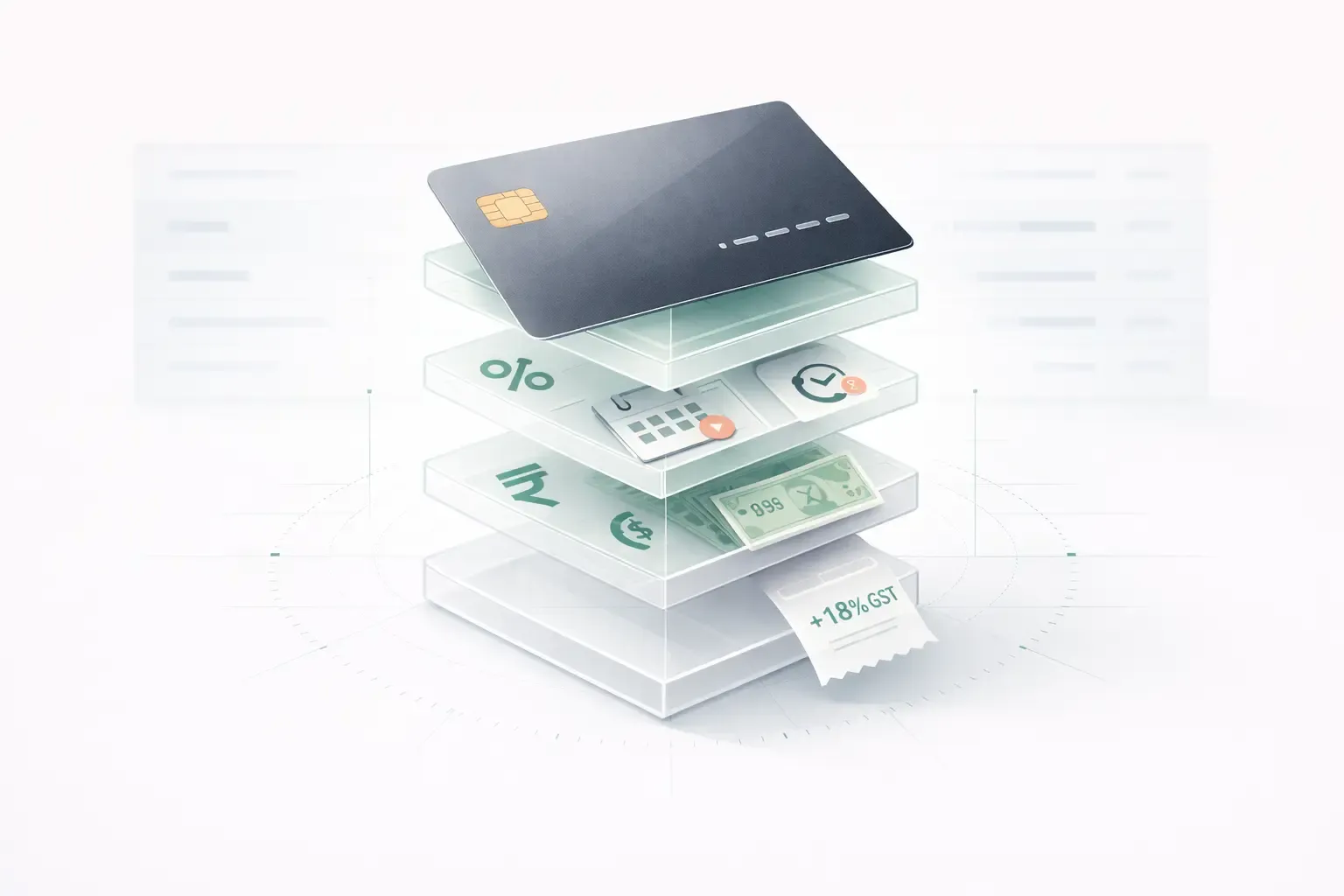
Banks love customers who pay interest. They design entire systems, reminders, and reward structures around one quiet hope: that you will eventually forget, delay, or justify carrying a balance “just this once”. Once that happens, the system quietly takes over and the bank starts winning.
The philosophy is simple: we use credit cards exactly as they are meant to be used, but never in the way banks profit from the most. This is your manifesto for staying in the Zero Interest Zone.
Rule 1: “Minimum Due” is a trap, not an option
The Minimum Amount Due (MAD) is usually just a tiny 5% of your bill, presented as a “safety feature” to avoid late fees. It is a dangerous trap because the moment you pay only the minimum, the remaining 95% of your balance starts attracting interest at annual rates as high as 45% .
Even worse, this choice often kills your interest-free grace period. This means your next grocery run or morning coffee starts attracting interest from the second you swipe. In this system, there is no “Minimum”—there is only the Total Amount Due.
Rule 2: Your credit limit is a lie
A credit limit represents the bank’s tolerance for risk, not your actual capacity to repay what you spend. When you anchor your spending to the bank’s number instead of your actual bank balance, you are essentially inviting debt into your life.
The rule is absolute: if the money isn’t already sitting in your bank account, you do not swipe the card. This single habit turns your credit card into a powerful tool—a “debit card that simply pays you later”—rather than a source of financial stress.
Rule 3: Master the “Magic 50” (The Billing Cycle)
A credit card does not give you a flat 50 days of free credit on every purchase; the window depends entirely on when you spend during your billing cycle. Purchases made the day after your statement is generated enjoy the longest float, while items bought right before the cycle closes get a much shorter window.
Understanding these dates isn’t about gaming the system—it’s about having the clarity to plan big-ticket expenses without a “due date” surprise. When timing becomes intentional, interest stops appearing unexpectedly.
Rule 4: Autopay is non-negotiable
Interest is rarely paid because of a lack of money; it is usually paid because life happens. Travel, work, or a single missed reminder is all it takes to trigger 42% interest and late fees.
Banks know that memory is fragile, which is why we treat autopay as a mandatory requirement rather than a convenience. By setting your card to automatically pay the Total Amount Due every month, you replace “hoping to remember” with “guaranteed discipline”. Automation is discipline you don’t have to think about.
Rule 5: Rewards never justify interest
Many people fail because they chase points or milestones and convince themselves that paying interest “just once” is an acceptable trade-off. It is not. The math is brutal: a 2% reward cannot offset a 42% interest rate.
The moment interest is charged, the entire reward equation collapses. In this system, rewards are incidental side effects of spending you were already going to do. If a purchase only makes sense because of the “points,” it doesn’t make financial sense at all.
The Promise
When these rules are applied consistently, credit cards stop feeling powerful or dangerous. They become quiet infrastructure in the background of your life, where statements turn into information instead of a source of anxiety. Most importantly, the bank stops being the automatic winner in the relationship.
The one line to remember: Credit cards are safest when treated like debit cards that you pay later.