The SBI Playbook: Why Milestones Beat Points
Master SBI's unique milestone-based rewards philosophy. Learn how tangible benefits at spending thresholds create primary card behavior and why SBI wants you to feel rewards, not earn points.
The Points Fatigue Problem
You’ve got 47,329 reward points sitting in your account. What are they worth? ₹11,832? ₹9,465? Or maybe ₹15,730 if you transfer them during that limited-time promotion you keep forgetting about?
You spend five minutes scrolling through a redemption catalogue. Air fryer for 25,000 points. Bluetooth speaker for 15,000. A gift voucher that requires you to spend an additional ₹2,000 to get full value. You close the app. You’ll deal with it later.
This is the reward points treadmill. You’re accumulating value, but you never quite feel it. It’s abstract, deferred, and vaguely stressful.
SBI looked at this mess and asked a different question: What if we stoppcan ed making people earn rewards and started making them feel them?
The Fundamental Shift: Targets Over Balances
While HDFC, Axis, and American Express compete on reward rates; 3X here, 5X there, 10X on Tuesdays, SBI built their portfolio around a radically different insight: customers don’t want to earn rewards, they want to feel them.
This philosophy manifests in SBI’s milestone-based reward structure, which appears across virtually every card in their portfolio. Rather than offering competitive base reward rates, SBI dangles tangible benefits at specific spending thresholds:
- Movie vouchers at ₹1 lakh spent
- Gift vouchers at ₹3 lakhs
- Bonus reward points at ₹5 lakhs
- Tata Cliq vouchers at ₹10 lakhs
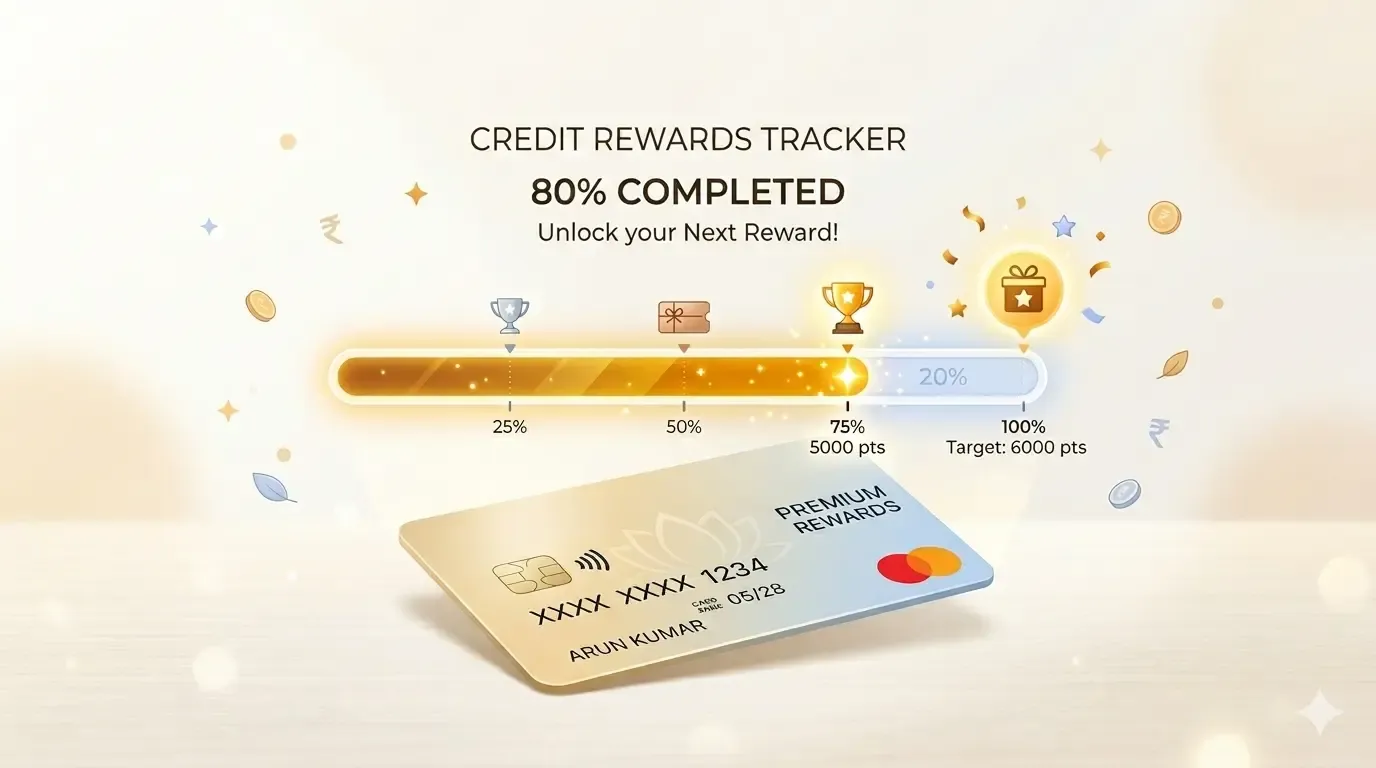
The genius isn’t in the rewards themselves, it’s in the behavior this creates. Milestones don’t just reward spending; they gamify it. They turn your credit card into a quest with a visible finish line.
And once you’re 80% of the way there? You’re locked in.
The Psychology of Quests vs. Points
Have you ever tried to buy a ₹5,000 flight using points valued at 25 paise each? It’s a nightmare, right?
Traditional reward point systems have a fundamental problem: they’re abstract. When you earn 5 reward points per ₹150 spent on your HDFC Diners Club Black, you’re accumulating a number that requires mental math to convert into actual value. Even after you’ve earned 50,000 points, you still need to browse a catalogue, calculate redemption values, and execute a transaction to feel any benefit.
SBI flips this model on its head. Instead of abstract points, they offer concrete quests: hit a spending threshold, unlock a tangible reward. Each card in the portfolio; Elite, Prime, SimplyCLICK, Aurum, has its own set of milestones, but the structure is the same across all of them. Spend enough, and something real lands in your account. A voucher. A bonus. A free movie ticket.
Notice the pattern: every benefit is tangible, time-bound, and achievable. You’re not earning points toward some distant, abstract goal. You’re completing quests with clear rewards at the end.
This is gamification at its finest. And it creates a psychological effect that traditional point systems can’t match: the sunk cost fallacy working in SBI’s favor.
If you’re sitting at 90% of a milestone threshold in November, you’re going to push that last bit of spending onto the SBI card even if you might earn slightly more points using another card. You’ve already invested in the quest. Might as well finish it.
The Default Card Strategy: Beyond Generics
Here’s what most analyses of SBI cards miss: SBI doesn’t just want to be a card in your wallet. They want to be the default card for specific life activities.
While HDFC has Swiggy and Tata Neu , SBI dominates the “Utility King” segment for the masses:
IRCTC SBI Card: The Commuter’s Companion
This is arguably the most underrated card in India. If you book train tickets more than twice a year, this card basically pays for itself. The IRCTC partnership makes this the absolute must-have for the Indian rail traveler. No complex multipliers. No category restrictions. Just straightforward value on something you’re doing anyway.
BPCL Octane: The Fuel Fortress
Want the best fuel card in the country? This is it. BPCL Octane’s partnership delivers consistent value at the pump with waived fuel surcharges and accelerated rewards. For anyone with a regular commute, this becomes your default fuel card—and SBI captures that spend automatically.
Air India/Vistara SBI Cards: The High-Flyer Play
These aren’t just co-branded cards; they’re strategic plays for frequent travelers. While other banks compete on lounge access, SBI went straight to the source: airline miles on an Indian carrier. For domestic flyers who don’t need Emirates or Singapore Airlines miles, this is a direct path to free flights.
The Pattern: SBI isn’t trying to be everything to everyone. They’re becoming the default card for specific activities—commuting, fuel, domestic travel, and rail journeys. Once they own that category in your mind, they own that spending stream.
Creating Primary Card Behavior
Milestones create a powerful incentive to consolidate spending onto a single card, to make it your primary card. This is the quest completion effect: the same psychology that keeps you playing video games to unlock the next achievement, even when you’re tired. You’ve already invested 80% of the effort. Might as well finish.
The brilliance is that milestones work regardless of whether customers realize they’re being influenced. You might think you’re just “finishing what you started.” But SBI has effectively captured your wallet share for the next three months, without needing to compete on base reward rates at all.
The Movie Ticket Masterstroke
One of SBI’s cleverest implementations of the milestone philosophy is the monthly movie benefit on SBI Elite. Cardholders receive a pair of complimentary movie tickets every month from BookMyShow , adding up to meaningful annual value without any spending threshold to hit.
This isn’t technically a spending milestone, but it operates on the same psychological principle: you feel the benefit every single month.
Every month, you see those two tickets in your BookMyShow app. Every month, you use them. Every month, the card proves its value to you in a tangible, immediate way.
And here’s the subtle genius: those tickets expire at the end of each month. Use them or lose them. This creates a monthly engagement cycle, you’re logging into BookMyShow, thinking about your SBI Elite card, and actively experiencing its value at least once a month. It’s a reminder system built into the reward structure itself.
The Milestone Math: Seeing the Value
Before we look at the individual cards, let’s look at the math that makes this strategy work. While SBI’s base reward rates might seem modest, the milestones act as a massive, deferred “interest payment” on your spending loyalty.
Here is how the milestones effectively “boost” your overall return:
| Card | Primary Milestone Target | Reward / Voucher Value | Effective “Bonus” Boost |
|---|---|---|---|
| SimplyCLICK | ₹1 Lakh Spend | ₹2,000 Voucher | 2.0% extra |
| SimplyCLICK | ₹2 Lakh Spend | ₹4,000 Total Vouchers | 2.0% extra |
| SBI Prime | ₹5 Lakh Spend | ₹7,000 Vouchers | 1.4% extra |
| SBI Elite | ₹8 Lakh Spend | 50,000 Points (₹12,500) | 1.56% extra |
(Note: This is strictly the bonus value and is added on top of your standard base reward points!)
Card-by-Card: How Milestones Shape Each Product
SBI Elite
On base reward rates alone, SBI Elite is uncompetitive. The earn rate on everyday spending is modest at best. But that’s not the point. Elite is designed around a multi-tier milestone structure; several spending thresholds across the year, each unlocking bonus points. Hit all of them, and the milestone value alone more than covers the annual fee.
The Quest Framing: Think of SBI Elite as a game with multiple achievement levels. Each spending tier unlocks a new reward. You’re not just spending, you’re progressing.
SBI Prime
Similar story. Base rates are mediocre on most categories. But hit the annual spending milestone and you unlock a voucher payout that single-handedly justifies the card for high spenders, and once you’re close, you already know what to do with your remaining shopping.
SBI SimplyCLICK
An entry-level online spending card with accelerated points on select merchants. But the real value driver is a two-tier voucher structure: hit the first annual spending milestone, get a voucher; hit the second, get another. For a low annual fee card, the combined voucher value is exceptional but only if you make SimplyCLICK your primary online spending card.
The Entry Quest: This is SBI’s onboarding mechanism for younger cardholders. Hit the first milestone in your first year and you’ve experienced the dopamine hit of milestone completion. Now you’re primed for the upgrade to Elite or Prime.
SBI Aurum
SBI’s super-premium offering takes the milestone strategy to another level with monthly + annual milestones. Hit a monthly spending threshold, get a fashion voucher. Hit progressively higher annual thresholds, unlock increasingly premium rewards.
The Monthly Milestone Brilliance: This creates a recurring incentive to hit the monthly target every single month. It’s not just an annual quest, it’s a monthly ritual. This turns Aurum into a default primary card for high spenders.
You’re not just tracking toward one finish line. You have 12 mini-quests plus several major milestones. It’s gamification on steroids.
The Exception: SBI Cashback Card (The Disruptor)
Interestingly, SBI’s most successful recent card takes a completely different approach. The SBI Cashback Card offers strong flat-rate cashback on online spends and a smaller rate on offline purchases, with cashback automatically credited to your statement within two days.
No milestones. No vouchers. No tracking required. Just immediate, tangible value.
This seems to contradict SBI’s milestone philosophy, but it actually complements it. The Cashback card is SBI looking at their own complex milestone system and saying, “For the people who hate math, here’s a sledgehammer.”
It’s the anti-strategy strategy. While Elite, Prime, and Aurum require you to track spending and plan toward milestones, the Cashback card is for customers who want zero cognitive load. Swipe, earn, done.
The Strategic Brilliance: SBI understands their market well enough to offer both strategies:
- Milestones for those who respond to goals and gamification
- Instant cashback for those who want simplicity and immediate gratification
This isn’t contradictory, it’s comprehensive. SBI captures the optimizers and the simplifiers.
Strategic Implications: How to Play the Milestone Game
If you understand SBI’s milestone strategy, you can optimize around it. Here’s the playbook:
1. Treat SBI Cards as Primary Cards, Not Specialists
Don’t try to optimize SBI cards category-by-category against HDFC or Axis. The milestone structure rewards consolidation, not diversification.
Pick one SBI card that matches your annual spending level; SimplyCLICK for lighter spenders, Prime or Elite for mid-to-high spenders, Aurum for premium spenders, and route most transactions through it. Let the milestones come to you.
2. Track Your Spending Trajectory (Especially Q4)
Download your SBI app. Check your year-to-date spending in October. If you’re close to a milestone with two months to go, you know exactly what to do: push the remaining spend onto that card before December 31st.
The Q4 Push: November and December are milestone-chasing months. Insurance renewals, holiday shopping, Diwali purchases, route them strategically to cross thresholds.
3. Don’t Ignore Monthly Benefits
The SBI Elite movie benefit is a fixed monthly perk. If you’re not using it, you’re leaving real money on the table every month.
Similarly, if you have Aurum, hitting the monthly milestone should shape your spending rhythm. It’s voucher value that compounds across the year, 12 months of monthly quests adds up fast.
4. Use Co-Branded Cards for Default Categories
IRCTC SBI: All train bookings. No exceptions.
BPCL Octane: All fuel. Every tank.
Air India/Vistara: All domestic flights.
Don’t overthink it. These cards are designed to be default choices for specific categories. Treat them that way.
5. The Cashback Card for Everything Else
If you don’t want to think about milestones, optimization, or tracking, the SBI Cashback card offers competitive flat-rate returns without any mental overhead.
Strong cashback on online. A base rate on offline. Credited within days. Done.
It’s the anti-milestone card in SBI’s lineup, and that’s exactly why it works.
Why This Strategy Works for SBI
From SBI’s business perspective, the milestone strategy delivers several advantages:
Higher Wallet Share
Milestones encourage cardholders to consolidate spending, increasing SBI’s share of total credit card transactions. Instead of splitting spend across five cards, you’re routing the bulk of it through SBI to hit those thresholds.
Predictable Costs
Milestone rewards have capped payouts. SBI knows exactly what they’ll pay out at each spending threshold, making budgeting easier than open-ended point accumulation. There’s no risk of a power user accumulating points and redeeming them for outsized value.
Lower Redemption Friction
Vouchers and fixed benefits reduce the complexity of redemption. Customers don’t need to browse catalogues or calculate optimal redemption values. The reward is predetermined and automatic.
Behavioral Lock-In
Once a cardholder is tracking toward a milestone, switching cards mid-year means losing progress toward that goal. This creates natural retention. You’re not going to abandon your card two months before hitting a meaningful milestone.
Marketing Differentiation
In a market where every premium card advertises multiplied points on dining, SBI’s milestone message “spend X, get Y” is clearer and more tangible to the average consumer.
Conclusion: A Different Rewards Game
SBI Cards doesn’t play the same rewards game as HDFC, Axis, or American Express. Instead of maximizing points per rupee, they’ve built a portfolio around making rewards feel real, achievable, and immediate.
For cardholders, this means treating SBI cards differently:
- Don’t optimize them transaction-by-transaction. Understand the milestone structure, pick a card that matches your annual spending level, and make it your primary card.
- Track your progress. Milestones only work if you know where you stand.
- Time large payments strategically. Insurance, tax, tuition—route them to hit thresholds.
- Use co-branded cards as defaults. IRCTC for trains. BPCL for fuel. Stop overthinking it.
The exception, of course, is the Cashback card which proves SBI knows exactly what they’re doing by offering both milestone-driven cards and instant gratification for those who want zero complexity.
In the end, SBI’s strategy is simple: Don’t make customers earn rewards. Make them feel them.
And once you feel them? You’re hooked on the quest.