The HDFC Playbook: How Their Card Ladder Keeps You Climbing
Decode HDFC portfolio strategy, SmartBuy multipliers, and upgrade path from entry-level cards to premium rewards optimization.

You know that feeling when you’re scrolling through credit card offers and every bank seems to be throwing benefits at you? Cashback here, rewards there, airport lounge access everywhere. But have you ever stopped to think about why banks design their cards the way they do?
Let me tell you about HDFC Bank’s credit card strategy – and trust me, once you see how cleverly they’ve built this, you’ll appreciate your card a whole lot more (or maybe even want to upgrade).
The Masterstroke: Building a Ladder, Not Just Cards
Here’s what HDFC figured out early on: people’s financial lives evolve. The fresh graduate getting their first salary has very different needs than a senior executive booking business class tickets. Instead of creating random cards and hoping people pick one, HDFC built something smarter – a ladder.
Think of it like a video game. You start at level one, and as you progress, you unlock better weapons, more powers, and cooler features. HDFC’s credit card portfolio works exactly like that, and it’s brilliant because it creates a journey for you while keeping you within their ecosystem.
The Entry Level: Where Everyone Starts
Let’s talk about cards like the HDFC MoneyBack or the HDFC Millennia . These aren’t flashy, and that’s intentional.
When you’re just starting your credit journey, HDFC knows a few things about you: you probably don’t have a massive credit score yet, you’re learning to manage credit, and you’re definitely not going to pay a ₹10,000 annual fee. So what do they do?
They create cards with:
- Low or zero annual fees (often waived on spending)
- Simple reward structures (flat cashback on categories you actually use – think groceries, online shopping)
- Basic but useful benefits (fuel surcharge waivers, purchase protection)
The Millennia, for instance, gives you 5% cashback on shopping and 1% on everything else – straightforward and easy to understand.
Why this works for you: You get a real credit card with actual benefits without paying through your nose. You build credit history, learn how rewards work, and get comfortable with the whole credit card thing.
Why this works for HDFC: They’re acquiring customers early. Sure, they’re not making massive money from you right now, but they’re building a relationship. They’re betting that as your salary grows, you’ll remember that they trusted you first. Plus, even these entry cards generate revenue through merchant fees and interest (if you carry a balance, though you shouldn’t!).
The Middle Ground: Where Things Get Interesting
Now we’re talking cards like HDFC Regalia or HDFC Diners Club Privilege . This is where HDFC’s strategy really starts to shine.
These cards typically have annual fees around ₹2,500-5,000, but here’s the clever part – they’re almost always waivable if you spend enough (usually ₹3-5 lakhs annually). See what they did there? They’re not just charging you a fee; they’re motivating you to spend more.
The benefits jump significantly:
- Better reward rates (4 reward points per ₹150 instead of 1% cashback)
- Airport lounge access (domestic and sometimes international)
- Golf privileges, priority customer service
- Better redemption options
The psychology here is fascinating: You’ve now “graduated” to a premium card. You feel valued. The annual fee (even if waived) creates a psychological commitment – you’ve invested in this card, so you’re more likely to use it as your primary card.
For HDFC: You’re now spending more, generating more merchant fees, and you’re sticky. You’re not going to switch banks easily because you’ve unlocked these benefits, built up reward points, and gotten used to the convenience.
The Premium Play: Super-Premium Cards
Here’s where HDFC went big: Infinia and Diners Club Black (DCB) .
These aren’t just credit cards; they’re status symbols, travel companions, and reward-generating machines. Annual fees? ₹10,000-12,500. But wait – they’re willing to waive these too if you spend ₹8-10 lakhs a year.
The benefits are insane:
- 3.3% reward rate on regular spends
- Unlimited airport lounge access
- Comprehensive travel and lifestyle benefits
- Priority everything
- Premium concierge services
But here’s what’s really smart: these cards are invite-only or hard to get. You can’t just walk into a branch and demand an Infinia. You need to have a relationship with the bank, a high credit limit, and significant income.
Why this exclusivity matters: It creates desire. Everyone in the credit card community talks about “getting Infinia.” It’s aspirational. And once you have it, you’re deeply invested in the HDFC ecosystem.
For HDFC: These are their most profitable customers. High spenders, low credit risk, generate massive merchant fees, and often maintain high-value relationships across other banking products (savings accounts, investments, loans).
The Co-Branded Strategy: Catching You Where You Already Are
Now, this is where HDFC shows they’re really paying attention: co-branded cards like HDFC Swiggy, HDFC Tata Neu, HDFC Marriott Bonvoy, and others.
Instead of making you adapt to their card, they’re meeting you where you already spend. Love ordering food? Here’s a Swiggy card with 10% cashback. Shop on Tata apps? Here’s a Tata Neu card with benefits there. Travel frequently and loyal to Marriott? Here’s a card that accelerates your Bonvoy points.
This strategy is genius for several reasons:
Behavioral targeting: They’re not trying to change your habits; they’re rewarding your existing ones. If you’re ordering from Swiggy three times a week anyway, getting 10% back makes that card a no-brainer for those transactions.
Partnership benefits: HDFC shares the cost of benefits with partners (Swiggy, Tata, Marriott). So they can offer higher rewards than they could independently. Swiggy wants more orders; HDFC wants more transactions – both win.
Portfolio within a portfolio: Even within co-branded cards, there are tiers like Tata Neu Plus vs. Infinity. The ladder continues.
For you: You’re getting rewarded for things you’d do anyway, and the high return rates make these cards extremely attractive for specific use cases.
For HDFC: They’re capturing spend in high-frequency categories (food delivery, e-commerce, hotels) that keep you engaged with the card regularly. Plus, they’re appealing to younger users who might not care about airport lounges but love food delivery or hotel stays.
The SmartBuy Masterstroke: Creating a Closed Ecosystem
Now, here’s where HDFC did something really clever that most people don’t fully appreciate: they created SmartBuy.
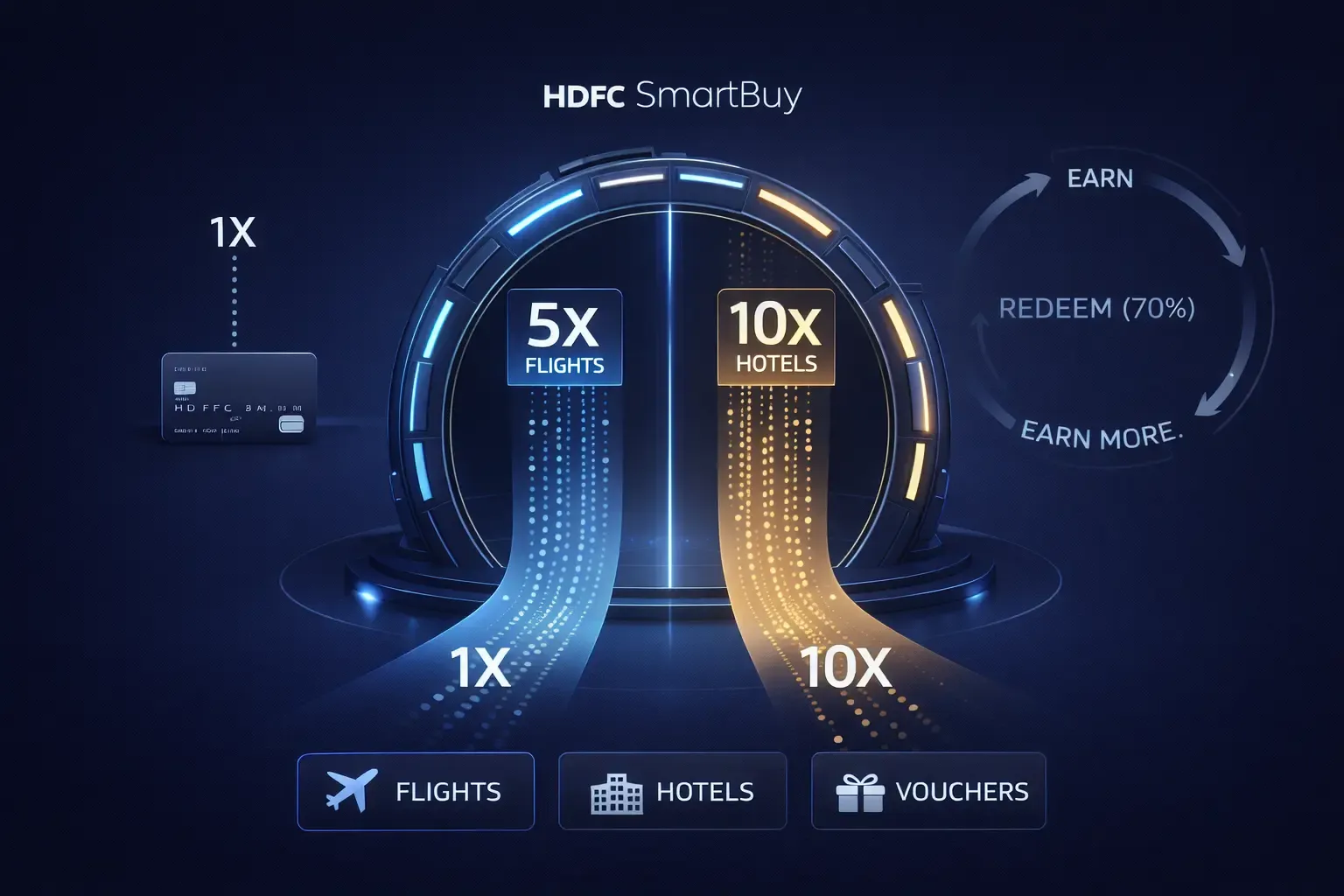
In simple terms, SmartBuy is HDFC’s own portal where you can book flights, hotels, buy gift vouchers, and shop – but with accelerated rewards. Most HDFC cards give you 5X or 10X rewards on SmartBuy transactions, or 5% cashback depending on the card type.
Here’s the interesting part – and this is a banking tactic worth understanding: almost all HDFC cards get similar multipliers on SmartBuy (5X-10X or 5% cashback), but the actual return you get varies dramatically based on your card’s reward point conversion rate.
What does this mean? Let me break it down:
- A Millennia card might give you 10X points, but each point is worth less
- An Infinia also gives 10X points, but each Infinia point converts to much higher value (especially when transferred to airline miles)
- So both cards say “10X rewards on SmartBuy,” but Infinia users end up with 15-16% returns while others might get 5%
This is brilliant from HDFC’s perspective because they can advertise generous multipliers across all cards while controlling the actual cost through varying point values. Everyone feels like they’re getting a great deal, but premium cardholders extract significantly more value.
For you: If you’re strategic (which, if you’re reading RewardVita, you probably are), you can maximize rewards by routing spends through SmartBuy. That vacation you were booking anyway? Book through SmartBuy, get accelerated rewards, and suddenly your effective return rate jumps significantly based on your card tier.
For HDFC: They’re controlling the transaction flow, earning merchant commissions from their partners (airlines, hotels), and keeping you engaged with their ecosystem. Plus, they can negotiate better rates with vendors because they’re bringing volume.
[Note: SmartBuy deserves its own deep dive, read our comprehensive SmartBuy guide here for the full optimization strategies]
The Lifestyle and Protection Benefits: The Invisible Value Add
Here’s something many people overlook but HDFC builds into their strategy: insurance and lifestyle protection benefits.
Depending on your card tier, you get:
- Travel insurance: Comprehensive coverage when you book travel with the card
- Lost card liability: Protection against fraudulent transactions
- Emergency card replacement: When traveling abroad
The premium cards take this further with:
- Higher insurance coverage: Up to ₹50 lakhs on air accident cover for cards like Infinia
- Golf privileges: Access to courses and lessons
- Priority Pass memberships: For airport lounges globally
- Concierge services: For bookings, reservations, and travel assistance
These aren’t flashy benefits that people talk about, but they add real value.
For HDFC: These benefits cost them relatively little (insurance is bulk-priced, concierge is outsourced) but add massive perceived value. They also reduce your need to get these services elsewhere, further deepening your relationship with the bank.
The Benefit Structure: How Both Sides Win
Let’s break down how HDFC structures benefits so everyone wins:
Tiered Spending Benefits: Most HDFC cards give better rewards as you spend more. This isn’t random, they’re using your own behavior to make the card more valuable to you while ensuring their revenue covers the cost.
Category-Based Rewards: Notice how online spending or specific merchants get better rewards? That’s because digital transactions have lower fraud risk and processing costs. HDFC can afford to give you more back because they’re saving money on the backend.
Annual Fee Waivers on Spending: This is psychology meets economics. The waiver target is set at a level where the merchant fees HDFC earns from your spending more than cover the benefit cost. You feel like you’re “beating the system” by getting the fee waived, but actually, everyone wins – you get benefits, HDFC makes money from your transactions.
Reward Point Expiry and Redemption Friction: Here’s an honest bit – not all your reward points get used. Some expire, some people never redeem them. This “breakage” is built into the model. But HDFC makes it easy enough that engaged users (like you!) can extract real value.
Exclusive Tie-Ups and Lounges: When HDFC gives you airport lounge access, they’re not paying the full retail price. They have negotiated rates with lounge networks. Same with golf, dining privileges, and concierge services. The cost to them is much lower than the perceived value to you.
The Long Game: Customer Lifetime Value
Here’s what it all comes down to: HDFC is playing the long game.
They’re not trying to make maximum profit from you in year one. They’re building a 20-30 year relationship. They want you to:
- Start with a MoneyBack or Millennia card at 22
- Upgrade to Regalia or Diners Club Privilege at 28 when you’re earning more
- Move to Infinia by 35 when you’re a senior professional
- Keep all your banking with them throughout
And honestly? If they deliver consistent value at each stage, why wouldn’t you?
The Reality Check: It’s Good, But Not Perfect
HDFC’s strategy works really well, but it’s not perfect. The high-end cards are genuinely hard to get. The reward point redemption system, while improving, can still be confusing. And like any bank, they’re in business to make money.
But compared to the scattered, incoherent approach many banks take, HDFC’s strategic ladder approach is refreshing. They’ve clearly thought about your journey, and they’ve built products that make sense at different life stages.
The Takeaway: Know the Game, Play It Well
Understanding HDFC’s strategy helps you make better decisions. You’re not just choosing a credit card; you’re choosing where you want to be on their ladder and planning your next steps.
Are you maximizing your current card’s benefits? Is it time to upgrade? Should you add a co-branded card for specific spending categories? These questions become easier to answer when you understand the strategy behind the portfolio.
HDFC built a smart system. As long as you’re aware of how it works including how they use tactics like varying point conversion rates, you can extract tremendous value from it while the bank makes their money through volume and loyalty. It’s not manipulation, it’s just good strategy meeting your needs.
And that’s the best kind of financial product: one where both sides benefit, and everyone can win if they play smart.